What actually makes a load oversize or overweight
Start with the federal numbers, because they set the baseline every state builds on. 23 CFR 658.17 sets the maximum gross vehicle weight at 80,000 pounds on the National System of Interstate and Defense Highways, the maximum gross weight on any single axle at 20,000 pounds, and the maximum gross weight on tandem axles at 34,000 pounds. It also applies the Bridge Gross Weight Formula to groups of two or more consecutive axles, with an exception allowing two consecutive sets of tandem axles to carry 34,000 pounds each when the overall distance between the first and last axle is 36 feet or more. In no case does the total gross weight exceed 80,000 pounds.
On length, 23 CFR 658.13 says no state shall impose a length limitation of less than 48 feet on a semitrailer in a truck tractor-semitrailer combination, and no overall length limitation on commercial vehicles operating in those combinations. The federal width limitation is 102 inches, and states may grant special use permits for vehicles that exceed it.
Permits are a state job, and that is why the broker matters
Everything past those baselines is a state question, and that is where shippers get surprised. The federal government does not issue oversize or overweight permits. The Federal Highway Administration publishes the contact for every state's permitting office, and you get a permit from the state you are traveling through. A load running from Arkansas to Texas and on to Louisiana is three sets of state rules and three permits, each with its own application, lead time, and definition of a nondivisible load.
Under the FHWA's published definition, a nondivisible load is one that exceeds applicable length or weight limits and that, if separated into smaller loads or vehicles, would compromise the intended use of the vehicle, destroy the value of the load or vehicle, or require more than eight work hours to dismantle using appropriate equipment. The applicant carries the burden of proof on dismantling time. Divisible loads are a different animal: states may issue designated divisible load permits only with historic grandfather rights or specific Congressional authorization for a state-specific commodity or route movement at a greater size or weight.
That definition is where the argument starts. A stack of steel plate can be cut up. A precast panel cannot. A transformer cannot. A machine with a serial number on its base cannot. Whether your freight qualifies as nondivisible is a determination made under state rules, usually by a state permit office, and getting it wrong means the truck gets turned around at a weigh station. A broker who has run the lane knows which loads get approved and which get bounced. Getting that wrong costs a load, a re-route, and a day.
Equipment: the trailer choice changes the permit answer
A step deck trailer lowers the deck height over the rear axles, which buys vertical clearance and lets tall freight ride without pushing the load over legal height limits. A double drop, a lowboy, or a removable gooseneck goes further. The point for a shipper is simple: the trailer that carries your load can decide whether you need a permit at all.
A load that clears legal height on a flatbed may need a permit on a standard deck and not need one on a step deck. That is worth real money when you compare the permit cost, the route delay, and the escalation on a load that gets stopped. The flip side is that specialized equipment is a smaller pool of carriers, so it takes longer to source and costs more when the pool is thin. An overhanging load needs flags and lights and has to clear bridge and tree lines, and a concentrated weight load must be placed so it does not overload one axle.
Weight, securement, and what the driver has to check
Overweight is not just about the total. The Bridge Formula under 23 CFR 658.17 can bind before you reach 80,000 pounds gross if the axles are grouped wrong, which is why the distribution of the load on the trailer matters as much as the total weight on the scale.
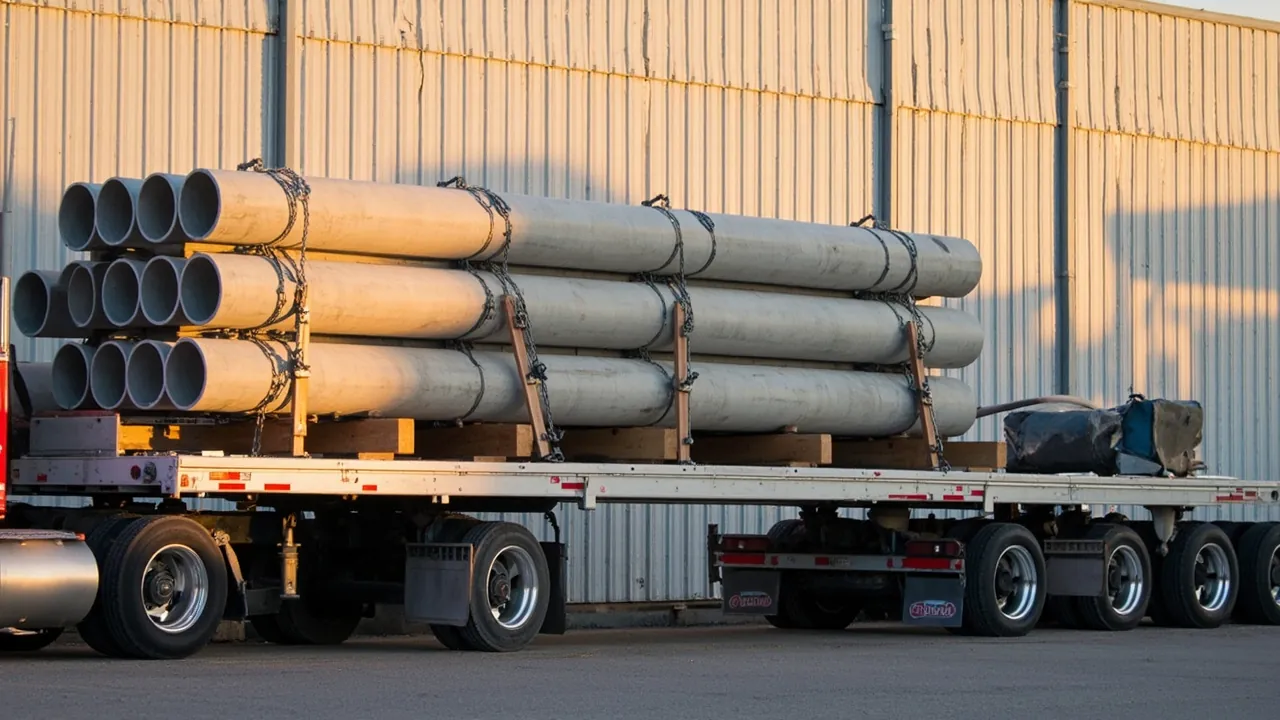
Securement has its own federal floor. 49 CFR 393.100 requires that each commercial motor vehicle be loaded, equipped, and the cargo secured to prevent it from leaking, spilling, blowing, or falling from the vehicle, and that cargo be contained, immobilized, or secured so it does not shift to an extent that adversely affects the vehicle's stability or maneuverability. 49 CFR 393.102 sets performance criteria for securement devices, including forces not exceeding the manufacturer's breaking strength under 0.8 g deceleration forward, 0.5 g rearward, and 0.5 g lateral, and for cargo not fully contained within the vehicle structure, a downward force of at least 20 percent of the weight of the article.
Then there is the inspection duty, which puts a real obligation on whoever loads the truck. Under 49 CFR 392.9, the driver has to inspect the cargo and the securement devices within the first 50 miles after beginning a trip and cause any adjustments to be made, including adding more securement devices, so cargo cannot shift within or fall from the vehicle. The driver also has to reexamine the cargo and devices during the trip and make adjustments whenever the driver changes duty status, the vehicle has run 3 hours, or it has run 150 miles, whichever comes first.
That is where the shipper's leverage is. If your load is stacked in a way that makes the driver's first inspection at 50 miles a problem, you do not want to find that out on the highway. How the freight is stacked, banded, and chocked, and whether the driver can reach and re-tension it, is worth a conversation at the dock.
What to put on the rate confirmation
An oversize load needs more than a standard rate confirmation, and the shipper who treats it like a standard load is the one who gets surprised. These items belong in writing before dispatch:
- Exact dimensions and weight of the load as loaded, and who certified them.
- Whether the load is nondivisible and what supports that determination.
- Which states the route runs through and who is pulling each permit.
- Permit fees and escorts, and whether they are inside the quoted rate or billed separately.
- Equipment type, including trailer height and any specialized gear.
- Overhang, if any, with the dimensions that trigger flags and lights.
- Who handles the paperwork at delivery if the freight needs to be disassembled.
Ask the broker for the permit status in writing, not a verbal assurance that it is handled. Ask what happens if a state rejects the permit application and who carries the cost of the re-route. These are the questions that keep a load from sitting on a shoulder at mile 40 because nobody checked the standard.
Where the record matters if something goes wrong
Oversize freight is more exposed to damage than a standard load, and the paperwork trail determines whether you get paid. Under 49 CFR 371.3, a broker keeps a record of each transaction showing the consignor's name and address, the name, address, and registration number of the originating motor carrier, the bill of lading or freight bill number, the compensation the broker received for the brokerage service and the name of the payer, and the freight charges collected by the broker with the date of payment to the carrier. Those records are kept for three years, and each party to a brokered transaction has the right to review the record.
That right is worth exercising after an oversize load. If a piece of steel came off the trailer, you need the carrier's identity and the bill of lading number to file a claim, and the load and securement documentation to support it.
BKE's rule on oversize freight
We quote the load on the equipment that actually fits it, not the equipment that is easiest to find. When a load needs state permits, we tell you which states, which permits, and what the timing looks like before you commit to a delivery date. We keep the transaction record under 49 CFR 371.3 and will show you what supports a charge when you ask.
For the shippers we work with, overweight and oversize is not a specialized corner of the business, it is a regular Tuesday. The difference between a load that moves and a load that gets stuck is usually somebody checked the rules before the truck rolled.
Related reading
The flatbed shipping guide covers the equipment basics, and the five questions to ask any flatbed carrier is the short version of what to verify before you book. The freight broker selection guide covers how to vet the broker arranging the capacity.